

City symbol of culture, art for those who want to breathe a unique and exceptional experience. Rich in museums and churches, any access route introduces visitors to a city that offers itself in all its glory.
Not far from the historic city and the itineraries frequented by mass tourism, in an environment no less historic, no less genuinely Venetian is the Venice lagoon and its islands, a wide expanse of water, land semi-immersed where the landscapes of silence change with the flow of the tides, the traditional lagoon boats obstinately resist aggression engine noise, the colors of water, earth and sky mingle with the red brick building human and sandbanks welcome to the typical fauna of the area: little egrets, herons, gulls, hawks, kingfishers …
Murano
The island is famous for its glass. Do not miss a visit to the glass museum and the great craftsmanship of glass furnaces with a wonderful display.
Burano
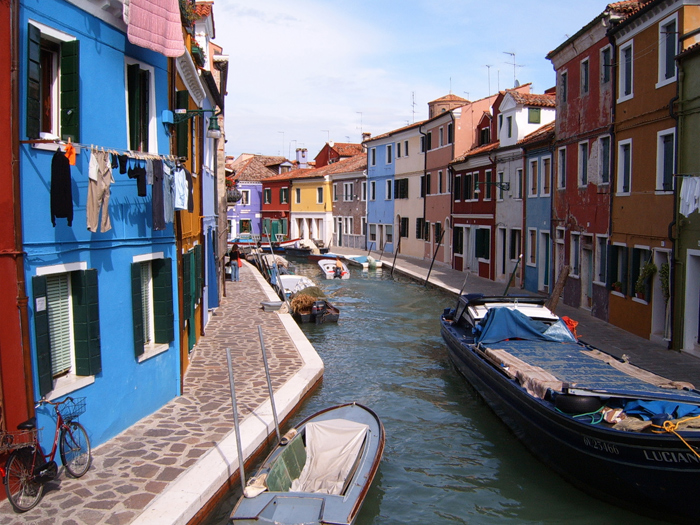
The island of fishermen, where you can admire a succession of low houses, all colored in different shades. The island is famous for the distinctive crafts of lace, it is possible to visit the museum and school of lace.
Torcello
Famous for the Estuary museum and for the throne of Attila.
Pellestrina
Thin barrier of over 11 km between the sea and the lagoon and protected impetuousness water from one of the most powerful defenses at sea and the Venetian Republic was able to realize to save his city: Murazzi.
The coast so ‘armored’ is guarding the tiny fishing villages that face, full of sounds, calls, voices on the murky lagoon waters: San Pietro in Volta, Portosecco (silted ancient port hours), the San Antonio and carizzada Pellestrina.
Lido di Venezia
Small and picturesque island in the lagoon that stretches for about 12 km in front of the beautiful Venice. Until the mid nineteenth century the island was only rural area surrounded by sand dunes and desolate with a few small towns. In the last two decades of the nineteenth century, after the departure of the Austrians, he began his urban and architectural transformation that led her to become, around the years 1910-1920, the most elegant seaside resort in Europe.
It became an important tourist and cultural center because of the International Film Festival.
Source: www.turismovenezia.it – www.turismopadova.it